Built-in vs wall-mounted electric fireplaces
Built-in or wall-mounted electric fireplace? Depth, wall work, clearances, outlets and the 60-inch models that can do both, explained before you buy.

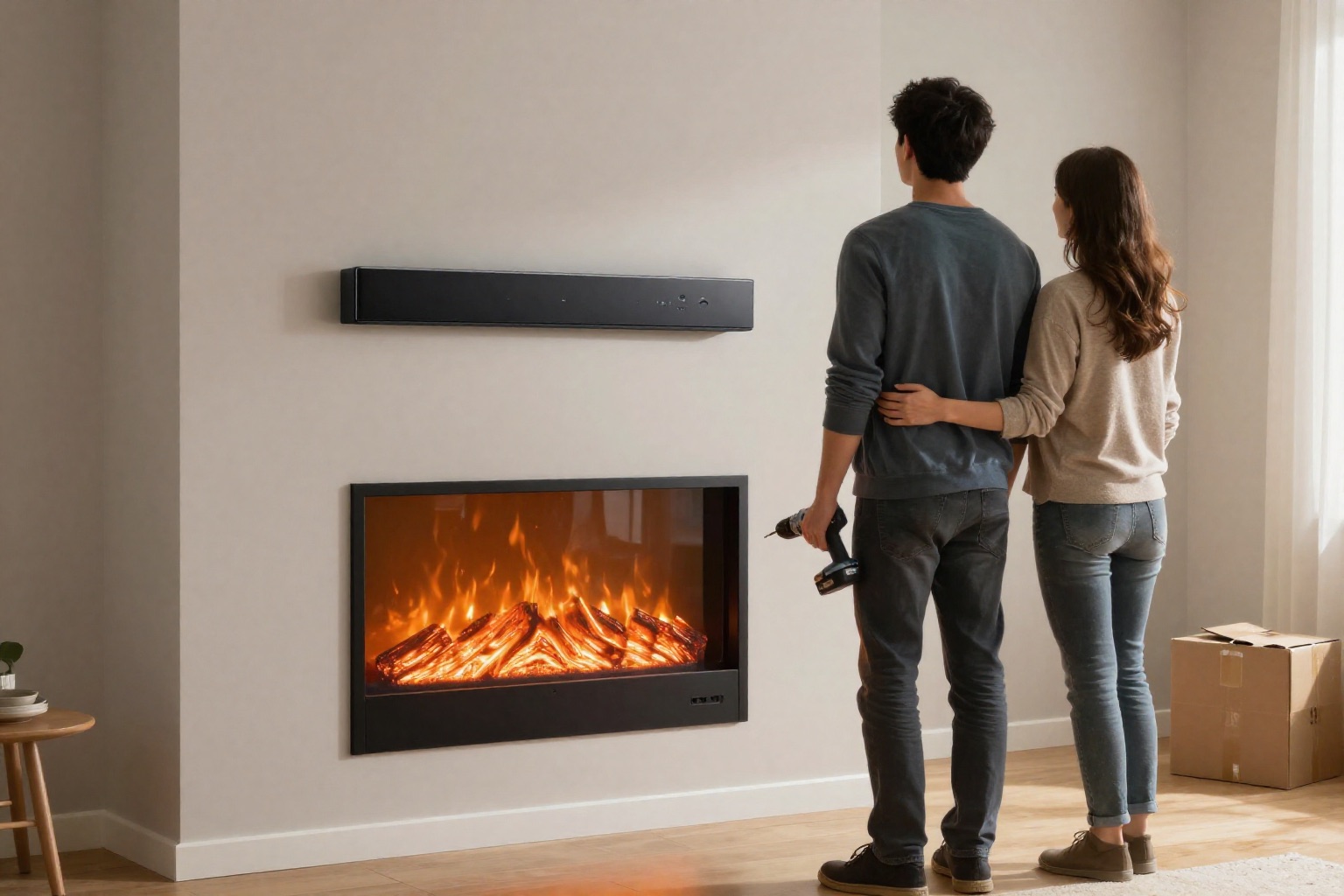
A wall-mounted electric fireplace hangs on a bracket fixed to the studs and plugs into a nearby outlet, so it goes up in an afternoon. A built-in (recessed) one sits in a framed opening with only the glass showing, which looks cleaner but means real building work. Plenty of 60-inch models, including our top two, can be installed either way, so you can decide by your wall rather than by the product.
Affiliate disclosureAs an Amazon Associate we earn from qualifying purchases made through links on this page. Commissions never change our ratings.
The difference at a glance
| Wall-mounted | Built-in (recessed) | |
|---|---|---|
| Wall work | bracket screwed to at least 2 studs | opening no more than 1/4 in larger than the firebox |
| How far it sticks out | the full depth, 5 1/2 in on the Sideline | only the front trim |
| Which walls | any solid wall | non-load-bearing walls only |
| Power | cord to a nearby outlet | outlet or hardwire inside the wall |
| Who does it | two people and a stud finder | builder or carpenter, electrician for in-wall power |
The clearances are the same either way on the Sideline: 6 inches to the floor, 12 inches at the sides, 8 inches up to a mantel, a TV or the ceiling, and 36 inches from curtains and furniture in front. Other models state their own, so read the manual of the exact one.
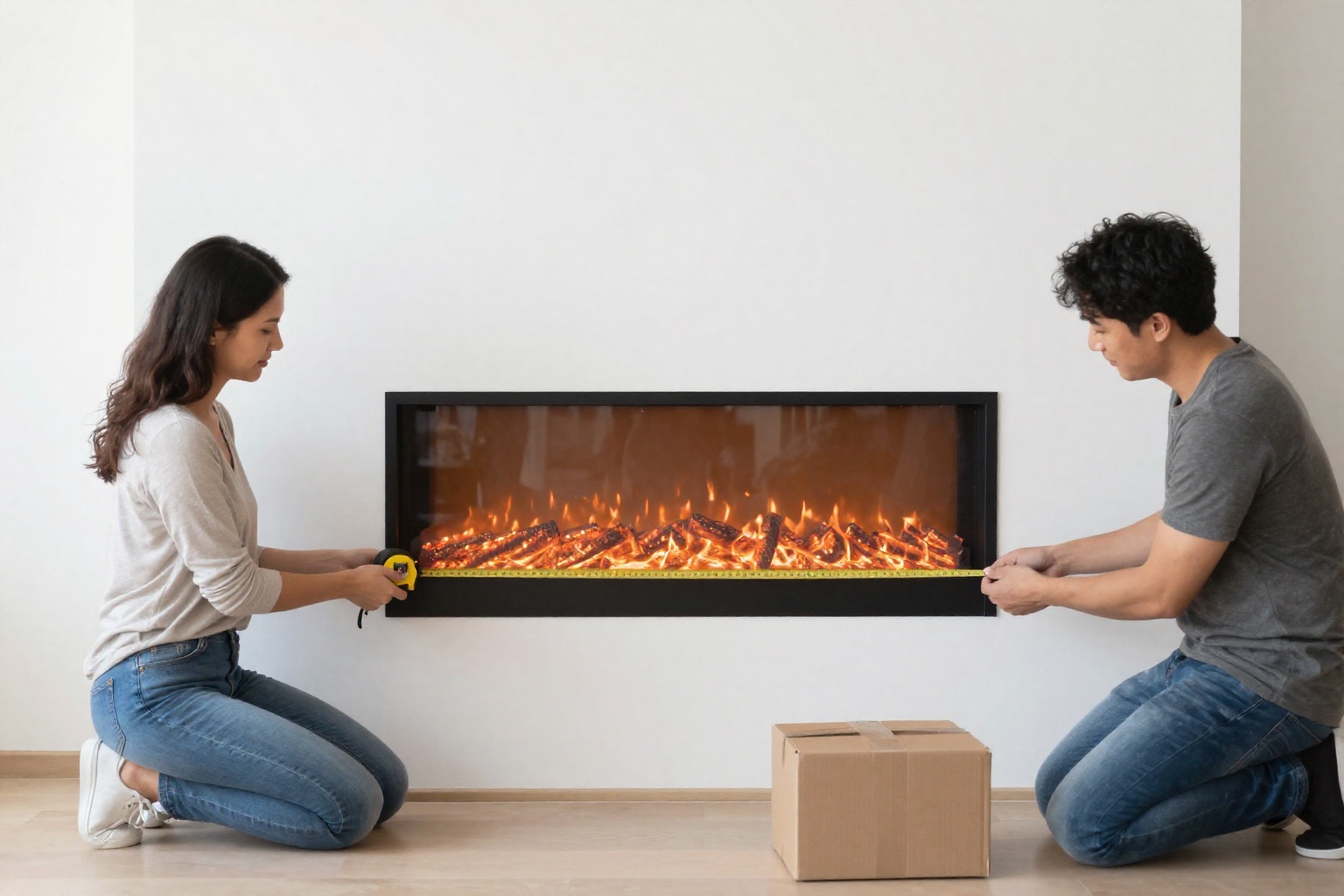
What are the advantages of a wall-mounted electric fireplace?
- No framing. Find two studs, level the bracket, lift the unit on with a second person. The Sideline box even includes drywall anchors for when two studs aren't available.
- It moves with you. Renters and anyone who might rearrange the room can take it down and fill a few screw holes.
- Easy power. It plugs into an ordinary outlet, ideally one placed behind or just below the unit so the cord stays short.
The trade-offs: the fireplace stands proud of the wall, and the cord shows unless you add a cover or have an electrician put an outlet behind it. If the room is a showpiece, that visible depth is what most people end up disliking.
What a built-in installation really involves
A recessed fireplace needs a framed cavity of exact size. For the 60-inch Sideline the rough opening is 47 1/8 inches wide, 20 1/2 inches high and 5 3/4 inches deep, much narrower than the 60 inches of glass and trim you see. Always build to the drawing of your exact model.
Touchstone recommends finishing the inside of the cavity with drywall so insulation and vapour barrier never touch the firebox, and asks you to talk to a local builder first because wall finishes vary. Dimplex's Revillusion firebox is a zero-clearance design except at the top, where insulation has to stay 2 inches away. Hardwired fireboxes need an electrician, and Dimplex reminds owners that a hardwired built-in falls under the local building code. Our recessed installation planning guide walks through the order of work.
- Cutting to the visible width. The opening follows the firebox drawing, not the size printed on the box.
- The wrong wall. Touchstone says to recess its fireplaces into non-load-bearing walls only. If you aren't sure what a wall carries, ask a builder before you open it.
- Forgetting the outlet. Decide where the plug or the hardwire connection goes before the drywall is closed, and keep the connection reachable as the manual asks.
Models that do both
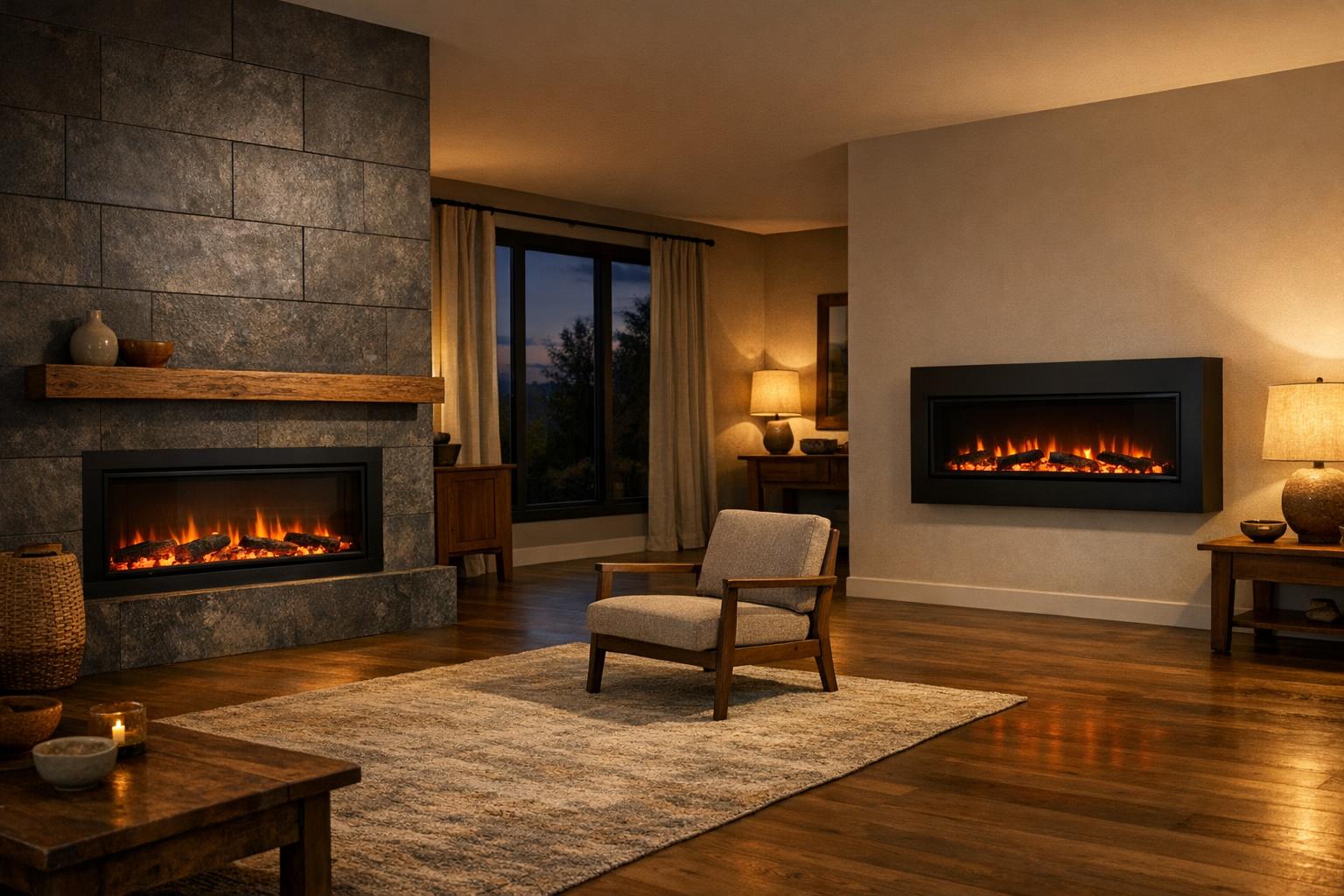
Most of the 60-inch inserts we rate are sold for both installations. The Touchstone Sideline 60" Smart is a recessed design whose manual also covers wall mounting. The Xbeauty 60" Recessed and Wall Mounted, the LegendFlame 60" Smart Wall/Recessed and the Westinghouse 60" Wall/Recessed all name wall mounting and recessing in their listings, and the Dimplex Sierra 60" adds freestanding feet.
That flexibility is handy: hang it on the wall now, and if you build a media wall in a couple of years, recess the same unit. Check that the listing for your exact size includes the trim kit or bracket you need, since accessories can differ between sizes.
Frequently asked questions
What are the advantages of a wall-mounted electric fireplace?
No framing, a quick install on two studs, an ordinary outlet, and you can take it with you when you move. The downside is that it sticks out by its full depth and the cord needs hiding.
Can a recessed electric fireplace also be wall-mounted?
Many can. The Touchstone Sideline manual covers both, and the Xbeauty, LegendFlame and Westinghouse 60-inch listings name both installations. Check the exact size you buy.
How deep is a recessed electric fireplace?
Slim models are about 5 to 6 inches. The 60-inch Sideline needs a rough opening 5 3/4 inches deep; larger fireboxes such as the Dimplex BF45DXP need a 16-inch deep frame.
Do I need an electrician for a built-in electric fireplace?
For a hardwired unit or an outlet inside the wall, yes. A plug-in unit on an existing outlet does not, but the wall itself is building work best planned with a builder.
Our rated picks
Building a media wall or a flush finish? Start with our built-in electric fireplace ranking, led by the Touchstone Sideline 60" Smart at 9.5/10. Want it on the wall this weekend? Our wall-mounted electric fireplace ranking is led by the Xbeauty 60" Recessed and Wall Mounted at 9.3/10, followed by the LegendFlame 60" Smart Wall/Recessed (8.8/10).
A TV going above? The gap matters more than the installation type: see our TV above an electric fireplace guide before you mark the wall.


Product images: Amazon listings
Sources
- Touchstone Home Products (owner’s manual hosted by Wayfair) — Sideline Series Electric Fireplace Owner’s Manual (consulted Nov 2026)
- Dimplex (Glen Dimplex Americas) — Revillusion Built-in Electric Firebox: Installation and User Guide (consulted Nov 2026)
- Dimplex (Glen Dimplex Americas) — Electric Fireplace FAQ (consulted Nov 2026)
- Dimplex (Glen Dimplex Americas) — BF45DXP Built-in Electric Firebox: Technical Specifications (consulted Nov 2026)